Ask five people how much water you should drink in a day and you will get five different numbers. Eight glasses. Two litres. Half your bodyweight in ounces. A litre per 20 kilos. The actual science is less catchy — and a lot more useful. It depends on your body, your environment, and what else you eat and drink during the day.
This guide walks through what European food safety authorities actually recommend, why the famous “8 glasses a day” rule is more cultural than scientific, what counts toward your daily intake, and where filtered or ionized water from the HomePure range fits into a considered hydration routine.
What science actually recommends
The most widely used reference values for water in Europe come from the European Food Safety Authority (EFSA). In its Scientific Opinion on Dietary Reference Values for water, EFSA proposes the following daily adequate intake from all sources — drinks and food combined.
| Group | EFSA adequate daily intake (all sources) |
|---|---|
| Adult women | ≈ 2.0 litres |
| Adult men | ≈ 2.5 litres |
| Pregnant women | ≈ 2.3 litres |
| Breastfeeding women | ≈ 2.7 litres |
| Children (4–8 years) | ≈ 1.6 litres |
| Adolescents (9–13 years) | ≈ 1.9 – 2.1 litres |
Roughly 70–80% of that intake is expected to come from beverages, and the rest from food. The numbers are reference points, not strict targets — they assume a temperate climate and moderate activity. If you live in a hot region, work outdoors, or train intensively, your real need is higher.
Where the “8 glasses a day” rule came from
The “eight 8-ounce glasses” formula has been repeated for decades, but its scientific basis is surprisingly thin. It is often traced back to a 1945 US Food and Nutrition Board recommendation that mentioned “about 2.5 litres a day” for adults — and immediately added that most of that intake is already contained in food. The “food part” got dropped along the way, and a clean, repeatable rule was born.
The point is not that 8 glasses is wrong. For many adults it lands in roughly the right zone. The point is that a fixed number ignores three things that genuinely matter: body size, climate, and how much water is already in your food.
How much of your water actually comes from food
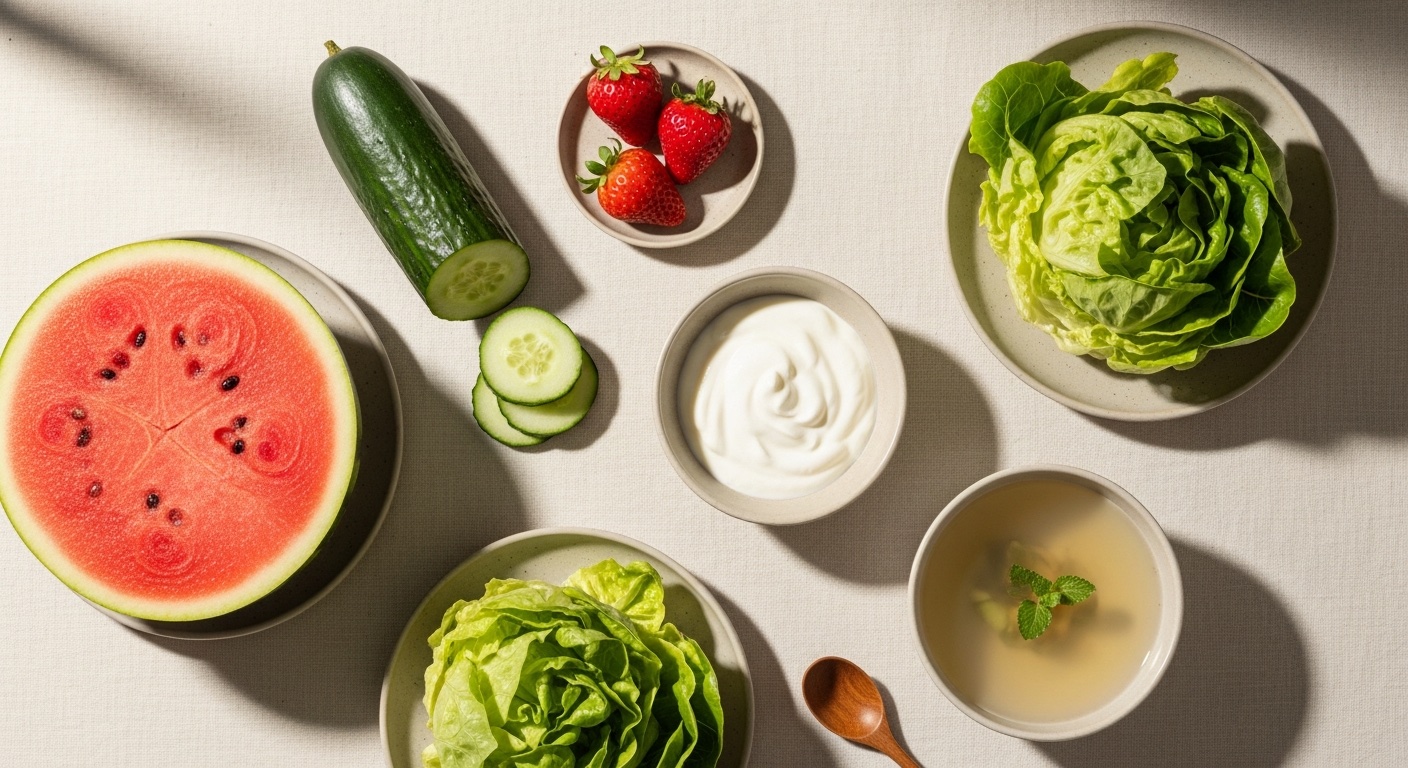
A surprising share of your daily hydration comes from what you eat. Fresh fruit, vegetables, soup, yoghurt and even bread carry meaningful amounts of water. A few examples by approximate water content:
- Cucumber, lettuce, watermelon: 95% or more.
- Tomato, strawberries, oranges: around 90%.
- Yoghurt, cooked pasta, boiled potatoes: 65–80%.
- Bread, cooked rice: 30–40%.
If your diet leans toward fresh, plant-rich meals, you are already drinking quietly through your fork. If it leans toward dry, processed foods, your fluid needs from beverages go up.
Signs you might be drinking too little
Thirst is a late signal — by the time you feel it, you are already mildly dehydrated. Earlier and more useful cues:
- Darker than usual urine — a pale straw colour is the typical target.
- Mid-afternoon fatigue or difficulty concentrating without an obvious cause.
- A dull headache that lifts within an hour of drinking water.
- Dry lips or a slightly tight feeling in the skin.
- Constipation or sluggish digestion.
None of these signals are diagnostic on their own. Combined, they are a fair indicator that the body is asking for more fluid.
When you need more than the baseline
The EFSA numbers assume an average adult in a temperate climate. Real life often pulls those numbers upward.
- Exercise: add roughly 0.5 to 1 litre per hour of moderate activity, more in hot conditions.
- Hot weather: sweat losses scale quickly with temperature and humidity.
- Air travel: cabin air is extremely dry; long-haul flights routinely cause low-level dehydration.
- Illness: fever, vomiting and diarrhoea increase fluid losses significantly.
- Breastfeeding: EFSA’s reference values already factor this in (≈ 2.7 L/day).
- High-protein or high-fibre diets: the body uses more water to process them.
Beyond plain water — what really counts
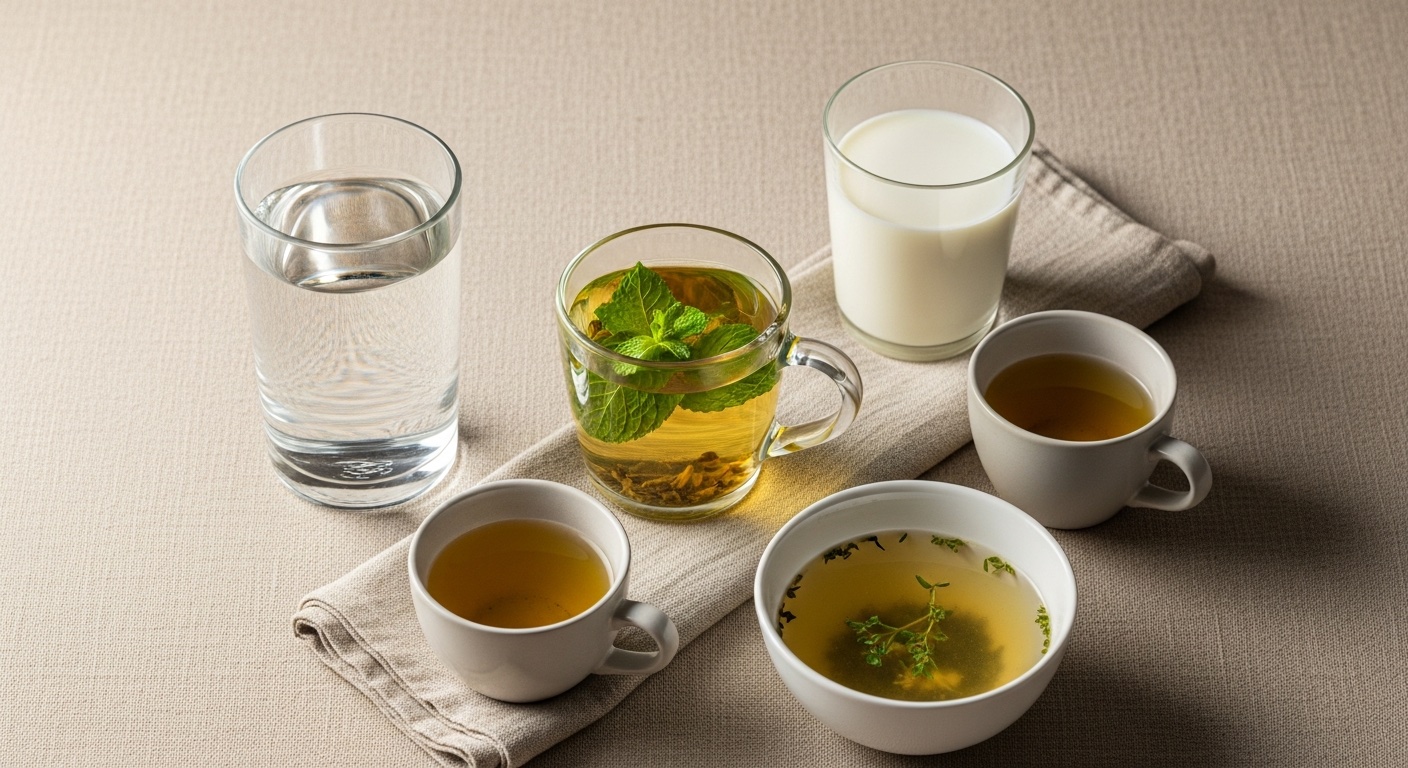
Hydration is not a contest between “real water” and everything else. Most beverages contribute to your daily intake.
| Source | Counts toward hydration? | What to keep in mind |
|---|---|---|
| Plain water | Yes — the cleanest baseline | The simplest, sugar-free, no caffeine. |
| Herbal and fruit teas | Yes | Effectively water with flavour and trace compounds. |
| Coffee and black tea | Yes, with nuance | Caffeine has a mild diuretic effect, but at typical intakes net fluid balance stays positive. |
| Milk and plant drinks | Yes | Roughly 85–90% water; also contributes nutrients. |
| Soup and broth | Yes | Often overlooked — a bowl can contribute 300–500 ml. |
| Fruit juice and soft drinks | Yes, but not ideal | Hydrating, but high in sugar; better used occasionally. |
| Alcohol | Net negative for hydration | Diuretic effect outweighs the fluid content. |
Tap, filtered or ionized — what is the difference?
In most European cities, tap water is rigorously regulated and safe to drink straight from the tap. Local conditions, however, vary. Old plumbing, hard water, chlorine taste, or the presence of micro-impurities lead many households to look for an additional layer of filtration.
- Tap water: regulated for safety; quality depends on local source and pipework.
- Activated carbon filtration: typically reduces chlorine taste, sediment and some contaminants.
- Multi-stage filtration: combines mechanical and chemical filtration for a broader removal profile.
- Water ionization: changes the water’s properties to produce so-called alkaline or hydrogen-rich water; popular among consumers looking for an everyday hydration upgrade.
Where HomePure fits into a daily hydration routine
The HomePure range from QN Europe covers two main directions in everyday drinking water, designed for different households and habits.
- HomePure Nova — a 9-phase drinking water filter. According to the manufacturer, it filters 99.99% of viruses, bacteria, chemicals, toxins, contaminants and turbidity from tap water, and is independently certified to NSF/ANSI 42, 53 and 401 (by NSF International) and to NSF/ANSI P231 and P244 (by the Water Quality Association).
- HomePure Viva — a 9-plate water ionizer. According to the manufacturer, it turns tap water into hydrogen-rich, alkaline water and is positioned for drinking, cooking, cleaning and washing.
Neither device removes the need for the basics — a varied diet, sensible portions of fruit and vegetables, and a habit of drinking through the day. They sit on top of that foundation, making the act of reaching for water easier and more pleasant.
Frequently Asked Questions
Is it possible to drink too much water?
Yes, although it is uncommon in everyday life. Drinking very large amounts in a short window — typically several litres in a few hours — can dilute blood sodium and cause hyponatraemia. The realistic risk applies mostly to endurance athletes and certain medical conditions, not to someone simply reaching for an extra glass at lunch.
Does coffee count toward my daily water intake?
For most regular coffee drinkers, yes. The mild diuretic effect of caffeine is offset by the volume of liquid consumed. EFSA includes coffee and tea among hydrating beverages. Black coffee on a near-empty stomach is the one situation where it is wise to pair it with a glass of water.
Is alkaline or ionized water better than regular water?
The scientific evidence on specific health benefits of alkaline water is still mixed, and most international authorities take a cautious position. Many users choose ionized water for taste, freshness, or as part of a broader wellness routine. If you go that route, look for a device with clear technical certifications and reliable filter replacement schedules.
How can I tell if I am drinking enough?
Two simple cues: the colour of your urine (pale straw is the typical target) and the absence of constant thirst or afternoon energy dips that disappear after a glass of water. A water bottle within reach for most of the day usually fixes 80% of the problem.
Should I drink filtered water if my tap water is already safe?
If your local tap water meets EU drinking water standards, you do not need filtration for safety. People still choose to filter for taste (chlorine, hardness), for the reduction of micro-contaminants such as microplastics or pharmaceutical residues, or simply for the convenience of a system at home instead of buying bottled water.
The bottom line
The honest answer to “how much water should I drink in a day” is around 2 litres for an average woman and 2.5 litres for an average man, from all sources combined — adjusted upward for heat, exercise, illness or breastfeeding. The bigger win is not hitting a specific number on one perfect day. It is making good water easy to reach, every day.
If you want to explore how a structured approach to drinking water fits into a broader healthy-home routine, the HomePure range from QN Europe — with HomePure Nova and HomePure Viva at its centre — is a good starting point. For the original European reference values, the EFSA Scientific Opinion on Dietary Reference Values for water remains the gold standard.