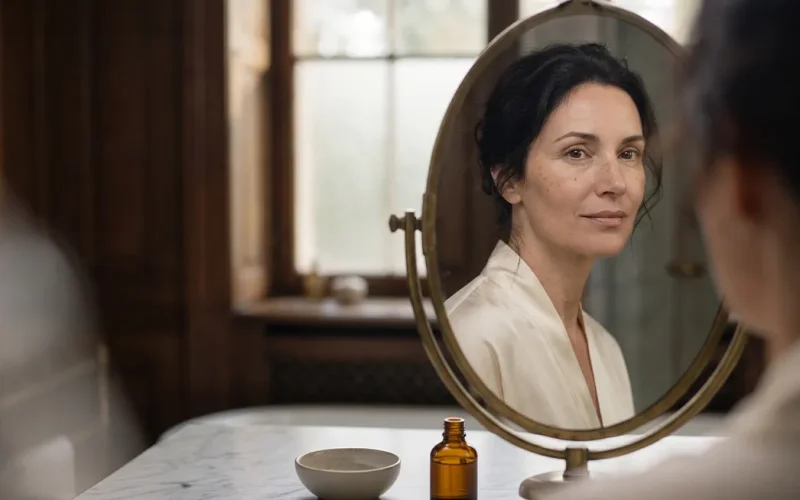
There is a Japanese idea that beauty lives in the things we usually try to hide. A chipped tea bowl. A wall that has faded unevenly in the sun. Skin that shows where you have laughed and frowned and lived. The word for it is wabi-sabi, and once you notice it, you start seeing it everywhere. Wabi sabi skincare takes that same forgiving eye and turns it toward the bathroom mirror. Instead of chasing a flawless face, you tend to the one you have, slowly and with a bit of care.
If you have ever felt worn out by ten-step routines and the pressure to erase every line, this is a softer way in. Let’s get into what it actually means and how to live it.
What Wabi-Sabi Really Means for Your Skin
Wabi-sabi grew out of tea ceremony and Zen practice in Japan, where plain, handmade, slightly irregular objects were prized over anything shiny and new. It is a core part of the Japanese aesthetic tradition, and it rests on a simple acceptance: nothing is permanent, nothing is finished, and nothing is perfect. That sounds gentle because it is.
Applied to your face, imperfect beauty means you stop treating freckles, fine lines, large pores, and a bit of redness as problems to solve by Friday. They are just features. The goal shifts from correction to care. You are not trying to look like a filtered photo. You are trying to keep your skin comfortable, hydrated, and yours.
This is not an excuse to do nothing. It is permission to do less, but to do it with attention.
The Pressure of Perfect Skin (And Why It Backfires)
Walk through any beauty aisle and the message is loud. Fix this. Reduce that. Reverse the clock. It is exhausting, and it can be hard on your skin too. Layering on acid after retinol after scrub, switching products every two weeks because results aren’t instant, none of that gives your skin a chance to settle.
A wabi-sabi mindset breaks that loop. You pick a few things that suit you and you stick with them long enough to actually notice how your skin responds. Patience becomes part of the routine. So does kindness toward the face looking back at you, lines and all.
Building a Mindful Japanese Skincare Routine
A classic japanese skincare routine is famous for being thorough, but the heart of it is gentleness and ritual, not the number of steps. You can borrow the spirit without buying twelve bottles. Here is a pared-back version that fits real mornings and tired evenings.
Cleanse Like You Mean It
Wash your face with lukewarm water and a soft cleanser, and take the full thirty seconds instead of rushing. In Japan, double cleansing at night, once with an oil-based product and once with a water-based one, is common after a long day or a full face of makeup. It leaves skin clean without that tight, squeaky feeling.
Hydrate in Layers
Pat a hydrating toner or essence onto damp skin, then follow with a moisturiser to seal it in. Layering thin and light beats one heavy cream for a lot of people. This is the stage where mindful skincare really shows up. Slow your hands down. Notice the texture and the scent. Treat it as two quiet minutes for yourself rather than another chore.
This is also where a line like Physio Radiance can fit naturally. Its products are designed to sit within a simple daily routine rather than complicate it, so you can keep the ritual short and still feel like you have shown up for your skin.
Protect Every Morning
Finish your day routine with sunscreen, even when it is grey outside. Daily SPF is one of the few habits most dermatologists agree on, and it asks very little of you. Thirty seconds, every morning, done.
Less Is More: The Beauty of an Edited Shelf
One of the quiet joys of this approach is clearing out the clutter. Half-used jars, that serum that stung, the mask you bought on impulse. A wabi-sabi shelf holds only what you reach for and trust.
When you edit down, two things happen. Your routine gets faster, and your skin gets more consistent care because you are not constantly introducing new actives that compete with each other. A short list also makes it easier to tell what is actually working for you.
- A gentle cleanser you genuinely like the feel of
- One hydrating step, such as a toner or essence
- A moisturiser that keeps skin comfortable through the day
- A daily sunscreen
- One treat you use a few times a week, like a soothing mask
That is a full routine. Everything past it is optional. If you want to keep things this simple as your skin changes over the years, it helps to choose products that work for you now and later. Our guide to skincare that grows with you through your 30s, 40s and 50s goes deeper on that.
How Wabi-Sabi Gives You a Real, Natural Glow
People spend a lot of money chasing a natural glow, but most of it comes from boring, unglamorous habits. Drinking enough water. Sleeping. Getting outside. Keeping skin hydrated so it reflects light evenly. The wabi-sabi view is that glow is not something you buy in a bottle and apply over your real skin. It is what your skin looks like when it is cared for and left alone to be itself.
The mindful part matters here too. Stress shows up on faces. When your routine doubles as a small daily pause, you carry a little less tension, and it tends to show. If you like the idea of building calm into the day in other ways, you might enjoy the small daily habits that make a home feel calmer.
Folding a product such as Physio Radiance into this kind of unhurried routine is one easy way to practise the philosophy without overhauling anything. You keep the steps few, you keep them regular, and you let consistency do the quiet work.
Turning a Skincare Ritual Into a Mindful Habit
The difference between a routine and a ritual is attention. Same products, same steps, but one is something you switch off through and the other is something you are present for. Try putting your phone in another room while you wash your face. Breathe out slowly as you apply your moisturiser. Look at your skin with curiosity instead of judgment.
Done this way, two minutes at the sink becomes a tiny anchor in the day, morning and night. It is not about indulgence. It is about treating ordinary care as something worth doing well. That, more than any single ingredient, is what wabi sabi skincare is really about.
Frequently Asked Questions
What is wabi-sabi skincare in simple terms?
It is a way of caring for your skin that accepts imperfection instead of fighting it. Rather than trying to erase every line or pore, you keep a simple, gentle routine and treat it as a calm daily ritual. The focus is comfort, consistency, and being kind to the skin you have.
Do I need a lot of products for a Japanese skincare routine?
No. A traditional japanese skincare routine can look long, but the spirit behind it is gentleness, not quantity. A cleanser, a hydrating step, a moisturiser, and daily sunscreen are plenty for most people. You can add an occasional mask if you enjoy it.
Where does Physio Radiance fit into a wabi-sabi routine?
It can be one of the few products you keep on an edited shelf. Physio Radiance is designed to slot into a simple daily routine, so it suits the pared-back, no-fuss approach that wabi-sabi encourages. Use it as part of your regular morning and evening steps.
Can mindful skincare really make a difference to how my skin looks?
Slowing down helps you stay consistent, and consistency is what most skin responds to. Habits like daily SPF, steady hydration, and enough sleep tend to support a healthy-looking, natural glow over time. Mindful skincare simply makes those habits easier to keep.
You do not have to love every part of your reflection to take good care of it. That is the gift of wabi-sabi: it lets you tend to your skin from a place of acceptance rather than pressure. Start with one calm step tonight and let the rest follow. And if this slower, more intentional way of doing things speaks to you, some people turn it into something bigger by becoming a QN Europe independent distributor and sharing it with others.